



Thinking about Replacing Your HVAC System? Here’s What Homeowners Need to Know
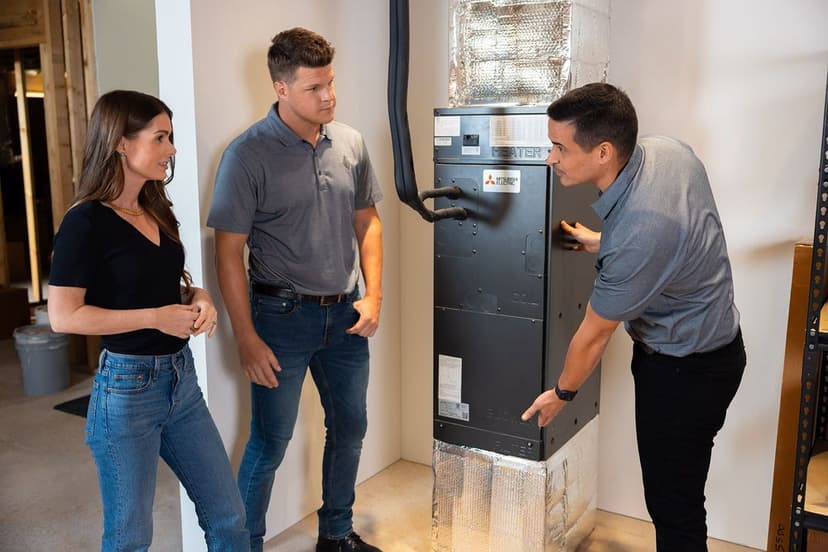 Replacing your HVAC system is one of the most crucial investments you can make in your home's comfort, efficiency, and value. This comprehensive HVAC replacement guide covers:
- When to consider replacing your HVAC system
- What a furnace and air conditioner replacement or full HVAC system upgrade might cost
- How to evaluate all of your options
- Why upgrading to an energy-efficient electric heat pump or mini-split system can deliver year-round comfort as well as decrease your monthly utility bills and environmental footprint.
When to Replace Your HVAC System
Knowing when to replace your HVAC system can save you from expensive emergency repairs, high energy bills, and those pesky temperature swings. These indicators signal that a system replacement is worth serious consideration.
Key Signs Your HVAC System Needs Replacing
- Age of the system: Most central air conditioners last 12–17 years and furnaces last 15–25 years[BA1.1][BA1.2]. If your system is in that age range, the efficiency drops, repair parts become harder to find, and the unit is likely to break down when you need it the most.
- Rising energy bills: Are your heating and cooling costs increasing even if you’re using the same amount of energy each month? This is a clear indication that your system is losing its efficiency. Older HVAC units just can't keep up. Replacing an aging HVAC system with a modern, energy-efficient unit can cut household energy use by 31%-47%, and by 41%-52% when combined with envelope upgrades, according to a National Renewable Energy Laboratory (NREL) report.
- Frequent and costly repairs: Here’s a hot tip: multiply your system's age by the cost of its next repair. If that number is over $5,000, replacing your HVAC system is the best financial solution.
- Inconsistent temperatures and comfort issues: If your house has warm spots, cool spots, too much humidity, or rooms that never feel quite right, your system isn't doing its job. These problems get worse as the system ages.
- Unusual noises and odors: Hear grinding, rattling, banging, or even squealing from your HVAC? Notice strange musty or burning smells coming from the system? These interruptions can lead to failing parts, like motors or heat exchangers, or even serious electrical issues. These are safety concerns that indicate that you’re due for a new system.
- Outdated refrigerant(R-22): Consider a system replacement if your air conditioner or heat pump still uses R-22 (Freon), which was phased out in 2020. R-22 supplies are scarce and expensive, making even the smallest repairs very costly. Newer generation refrigerants like R-454B, R-410A, and R-32 [BA3.1]are more efficient and sustainable, both from an economic and environmental standpoint.
When You May Not Need a Full System Replacement
Replacing your entire HVAC system isn't always necessary. You may not need to if:
- Your system is less than 10 years old, and the repair is small and inexpensive (like a capacitor, thermostat, or fan motor).
- Only one part needs fixing and the rest of the system is moderately new (installed within the last 3–5 years).
- You plan to sell your home within 1-2 years, and the system still works.
- A targeted addition can fix the problem, like a single-zone ductless mini-split for just one problem room.
Expert Advice: When in doubt, get a professional energy assessment. A qualified HVAC contractor can measure how well your system is working and help you weigh repair versus replacement costs objectively.
Benefits of Replacing Your Entire HVAC System
While you may decide that a full system replacement isn’t necessary based on the factors outlined above, a complete furnace and air conditioner replacement—replacing your heating and air conditioning system at the same time instead of doing an HVAC changeout piece by piece—offers big advantages. These include:
- Matched system performance: HVAC manufacturers design indoor and outdoor components to seamlessly work together as a matched set. Putting a new outdoor unit with an old indoor unit (or vice versa) means they will be less effective. You'd be paying for top-notch equipment but getting less efficiency.
- Maximum energy efficiency: Modern matched systems typically boast much higher SEER2 (Seasonal Energy Efficiency Ratio) and HSPF2 (Heating Seasonal Performance Factor) ratings compared to mixed-and-matched setups (old and new). An HVAC upgrade to a fully matched, high-efficiency system can mean noticeably lower energy bills.
- Full warranty protection: Manufacturers typically give full warranties when their equipment is installed as a matched system. Simply replacing a single component might void or limit your warranty on the new unit. This leaves you with the possibility of paying for repairs out of pocket on something that might be brand new.
- Eligibility for financial incentives: Many state rebates, utility incentives, and manufacturer deals come with the installation of a qualified matched system set. Only replacing an HVAC component could mean missing out on a series of significant energy-savings.
- Lower total installation costs: Getting both units replaced at once means one visit from the installation team, one set of labor charges, and one project timeline. Splitting it up means paying for two installations, which could be more expensive.
- Improved compatibility and reliability: Old and new parts might use different refrigerants or have different electrical needs. Mismatched systems tend to have more problems, cycle on and off, and break down sooner. A complete system replacement avoids all that and reclaims home comfort.
Full System Replacement vs. Single-Component Replacement
<u>Energy efficiency</u>:
Full system replacement: Maximized—components are engineered as a matched pair
Single-component replacement: Compromised—older component limits the new unit's performance
<u>Warranty Coverage</u>
Full system replacement: Full manufacturer warranty on all components
Single-component replacement: May be voided or limited on the new unit
<u>Financial Incentives</u>
Full system replacement: Eligible for federal tax credits, rebates, and utility incentives
Single-component replacement: Often disqualified from incentive programs
<u>Installation Cost</u>
Full system replacement: One installation visit, one total labor charge
Single-component replacement: Two separate installations over time at potentially higher rates
<u>System Reliability</u>
Full system replacement: Optimized compatibility and communication between units
Single-component replacement: Risk of refrigerant, electrical, or protocol mismatches
<u>Long-Term Value</u>
Full system replacement: Lower total cost over the system's lifespan
Single-component replacement: Higher cumulative costs from inefficiency and repeated labor
Benefits of Upgrading to an All-electric Mini-split Heat Pump System
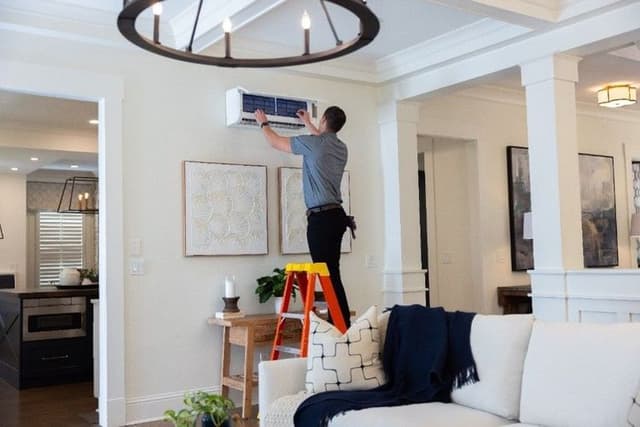 Electric heat pump and mini-split systems are the biggest leap forward in home HVAC. Unlike old systems that burn fossil fuels for heat, heat pumps move heat between the inside and outside, giving you both heating and cooling from one system. Modern mini-split heat pump systems combine an outdoor heat pump unit with one or more indoor units (wall-mounted units, ceiling cassettes, or ducted air handlers) for precise, room-by-room climate control.
Here’s a close look at the main benefits, backed up by information from the U.S. Department of Energy (DOE), Environmental Protection Agency (EPA), ENERGY STAR® and manufacturer specs.
Electric heat pump and mini-split systems are the biggest leap forward in home HVAC. Unlike old systems that burn fossil fuels for heat, heat pumps move heat between the inside and outside, giving you both heating and cooling from one system. Modern mini-split heat pump systems combine an outdoor heat pump unit with one or more indoor units (wall-mounted units, ceiling cassettes, or ducted air handlers) for precise, room-by-room climate control.
Here’s a close look at the main benefits, backed up by information from the U.S. Department of Energy (DOE), Environmental Protection Agency (EPA), ENERGY STAR® and manufacturer specs.
Energy and Cost Efficiency
Energy efficiency is the top reason why homeowners pick an electric heat pump when replacing their HVAC system.
How Heat Pumps Lead in Efficiency
Conventional furnaces generate heat by burning fuel (gas, propane, or oil). Even the best gas furnaces only get up to 98% fuel use (Annual Fuel Utilization Efficiency). [BA5.1]A heat pump; however, consistently moves existing heat around to achieve full use. For every bit of electrical energy the heat pump uses, it delivers significantly more in heating or cooling energy. This means heat pumps regularly hit efficiency levels that no fuel-burning system can come close to. Mitsubishi Electric heat pump systems are more than 160% more efficient than gas furnaces—according to the Air-Conditioning, Heating, and Refrigeration Institute—with the most efficient models (such as the MSZ-FX Deluxe Wall-Mounted Indoor Unit) reaching SEER2 ratings up to 35. That's exponentially higher than the existing federal minimum of 14–15 SEER2 for conventional systems.
What the Data Shows
- The U.S. DOE says air-source heat pumps can cut electricity use for heating by about 65%–75% compared to electric resistance heating (baseboard heaters).
- A 2024 NREL study found that 62%–95% of U.S. homes can save on energy bills by switching to a heat pump. Typical annual savings amount to $300–$650, depending on the system.
- ENERGY STAR® certified products estimate that if all heat pumps sold in the U.S. met the latest ENERGY STAR standards, the country would save $11 billion annually on energy costs.
- For homes currently using electricity, fuel, oil, or propane for heat, 92%–100% would see energy bill savings after switching to a heat pump (NREL, 2024).
Credits, Rebates, and Incentives
The financial reasons for replacing your HVAC system with a heat pump are stronger than ever, thanks to big incentives from state and local governments.
Home Electrification and Appliance Rebates (HEAR Program)
Funded by the Inflation Reduction Act, the HEAR program gives upfront, instant rebates for heat pump installations.
- Low-income households: (below 80% of area median income): Up to $8,000 for a heat pump—covering 100% of the project cost.
- Moderate-income households (80–150% of area median income): Up to $8,000—covering 50% of the project cost.
- These rebates are managed state-by-state and are set to remain effective until September 2031.
State, Local, and Utility Incentives
Beyond federal programs, many states, cities, and utility companies offer their own rebates and deals for energy-efficient HVAC systems. You can often combine these incentives with other credits to significantly lower your out of pocket total. Use our Rebate Finder to find local rebates.
Pro Tip: Combining state and utility rebates can cut the actual cost of a new heat pump system by $4,000–$10,000+, depending on your income, location, and the qualifying system that you install.
Quieter Operation
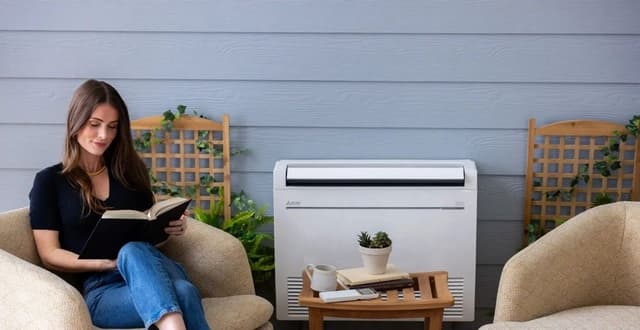 Noise is a factor worth considering when it comes to home comfort. Conventional central air conditioning and forced-air furnace units typically grind out 55–70 dB(A)—that's the equivalent of a dishwasher or a busy restaurant.
How Quiet are Mini-split Systems?
<u>Premium ductless indoor unit</u>
Typical Noise Level: 19 - 25 dB(A)
Sound Comparison: A whisper or rustling leaves
<u>Standard ductless indoor unit</u>
Typical Noise Level: 30 - 40 dB(A)
Sound Comparison: A quiet library
<u>Ductless outdoor unit</u>
Typical Noise Level: 40 - 50 dB(A)
Sound Comparison: A quiet office or light rain
<u>Central ducted heat pump</u>
Typical Noise Level: 45 - 55 dB(A)
Sound Comparison: Normal conversation
<u>Traditional furnace + air conditioning</u>
Typical Noise Level: 55 - 70 dB(A)
Sound Comparison: A dishwasher or busy restaurant
Mitsubishi Electric indoor units can operate as quietly as 19 dB(A)—that’s softer than a whisper. Our units achieve this with cutting-edge blade designs, vibration stoppers, and variable-speed compressors that don't abruptly start and stop like conventional systems.
Discreet Aesthetics and Design Flexibility

Modern mini-split indoor units are built to seamlessly blend with your home’s unique aesthetic. Mitsubishi Electric offers different styles, each designed to be visually subtle.
- Wall-mounted Units: Units are sleek and modern, mounted high on a wall. The award-winning MSZ-FX Deluxe, for example, has a smooth, matte finish and a simple design that fits right into any contemporary home.
- EZ FIT® Ceiling Cassettes: These units tuck away between your ceiling joists, making them almost invisible. You only see a thin grille from below, neatly integrated into your ceiling.
- Ducted Air Handlers: These units are completely hidden behind walls or above ceilings. Ducted units connect to short runs of ductwork and send conditioned air through regular vents, concealing the equipment.
From visible wall units to fully hidden ductwork, there’s a wide range of installation choices designed for your home’s unique aesthetic.
Strong Performance in Varying Climates

A common idea about heat pumps is that they only work well in mild weather. Modern cold-climate heat pump technology has revamped that idea.
Hyper-Heating INVERTER® (H2i®) Technology:
Mitsubishi Electric's Hyper-Heating INVERTER (H2i) technology lets heat pumps deliver 100% of their heating even when it's as cold as 5°F outside. This innovative technology uses a flash-injection compressor to operate in temperatures as low as -22°F. Flash injection enables prime compressor performance, running at higher speeds to maintain indoor comfort during cold temperatures. Older, more conventional heat pumps need backup electric heat or a gas furnace to maintain comfort.
ENERGY STAR® Cold Climate Requirements:
The ENERGY STAR program now certifies cold-climate heat pumps. To be certified, heat pumps are required to show efficiency at 5°F and keep at least 70% of their heating power at that temperature compared to 47°F.
Dual-fuel Flexibility
For homeowners in the coldest regions who want extra peace of mind and protection, Mitsubishi Electric's intelli-HEAT® dual-fuel system pairs a heat pump with an existing gas furnace. The heat pump handles heating efficiently when it's moderately cold. The gas furnace only starts when it's freezing, further cutting down on gas use while keeping you and the home nice and cozy.
Heat pumps now make up more than half of all residential heating equipment sales in the United States. This shows how much confidence people have in heat pump performance in any climate (U.S. DOE).
Precise Zoning and Multi-zone Flexibility
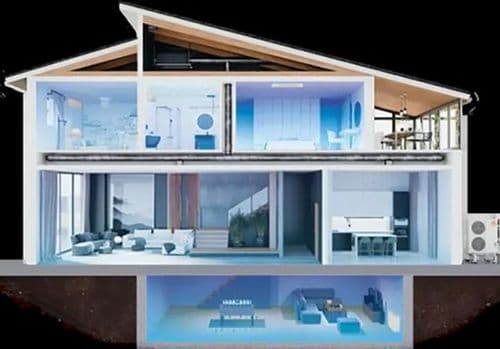
Conventional central HVAC systems heat or cool your home with one temperature setting. Conversely, mini-split systems heat or cool each room or zone.
How Zoned Comfort Works
A mini-split system has one outdoor heat pump unit connected to one or more indoor units. Each indoor unit has its own thermostat and controls. Mitsubishi Electric multi-zone systems can connect up to eight indoor units with one outdoor unit. The homeowner can control the temperature, fan speed, and scheduling for each zone or room.
Benefits of Zoned HVAC
- No more hot and cold spots: Each room feels just right; no more pesky hot and cold spots to get in the way of home comfort.
- Cut down on wasted energy: Rooms not in use can be set to Away Mode to save energy without bothering other occupied spaces. The DOE makes note that zoned systems stop you from wasting energy in unused areas.
- End thermostat arguments: Each member of the family can pick their ideal temperatures for their own spaces.
- Solve tricky architectural issues: Rooms over garages, sunrooms, finished basements, and other additions that are tough to heat or cool with your existing ducts can get their own zone for precise, personalized comfort.
- Smart scheduling: The Comfort app (formerly kumo cloud®) by Mitsubishi Electric lets you control all zones from your phone. You can tweak temperatures, set schedules, check energy use, and even direct airflow from your fingertips.
<u>Single-zone</u>
Description: One outdoor unit and one indoor unit
Ideal for: Individual rooms, special additions, sunrooms, garage conversions, home offices
<u>Multi-zone</u>
Description: One outdoor unit and 2-8 indoor units
Ideal for: Whole-home comfort, multi-story homes, open floor plans, homes without ductwork
<u>Hybrid/Dual-fuel</u>
Description: Heat pump and existing gas furnace
Ideal for: Extreme-cold climates where homeowners want backup heating protection
<u>Ducted air handler</u>
Description: One outdoor unit and 2-8 indoor units
Ideal for: Homes with existing ductworkseeking an all-electric upgrade
Improved Indoor Air Quality
Indoor air quality is a vital yet often overlooked part of home comfort. The EPA states indoor air can be much dirtier than outdoor air. Since Americans spend about 90% of their time inside, your HVAC system plays a big part in filtering air, managing humidity, and controlling pollutants.
No Combustion, No Combustion Byproducts
Gas furnaces, boilers, and oil systems produce carbon monoxide (CO), nitrogen dioxide (NOx), and other burning byproducts that can get into your living spaces, especially if heat exchangers crack or vents leak. All-electric heat pump systems produce zero emissions from burning fuels. The EPA points to pollution from burning as a top source of bad indoor air quality in homes using fuel-burning appliances.
Humidity Management
Heat pumps actively manage indoor humidity as part of their normal operation. The EPA suggests keeping indoor relative humidity between 30% and 50%. This helps stop moisture-related issues within the air. Heat pump systems help keep humidity in this range by drying the air in cooling mode and avoiding the over-drying that often happens with forced-air furnaces in winter.
Heat Pump Inverter Technology: The Engine Behind the Efficiency
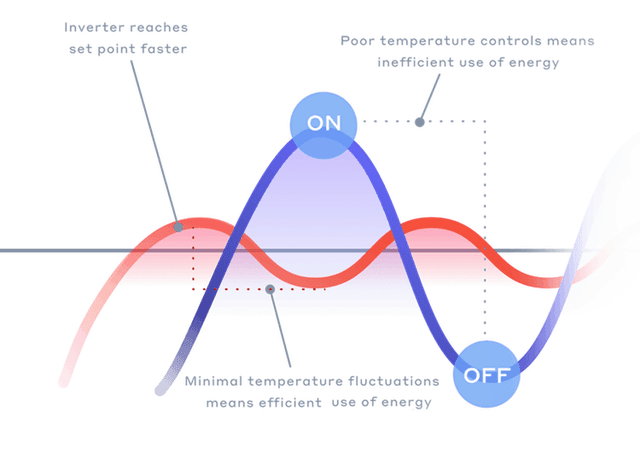
Inverter technology is the future-proof idea that makes modern heat pump systems stand out from regular HVAC equipment. Understanding how it works explains why heat pumps offer better efficiency, comfort, and a longer lifespan.
How Inverter-driven Compressors Work
A normal HVAC compressor is either all ON or all OFF. When your thermostat calls for heating or cooling, the compressor runs at full power. Once the temperature is met, it shuts down completely, only to blast back on at full power again when the temperature changes. This constant on-off cycling wastes energy during each startup and causes noticeable temperature swings.
An inverter-driven compressor, however, consistently changes its speed to match the heating or cooling needed in real time. It can run anywhere from 30% to 100% capacity, speeding up when more power is needed and slowing down as the room gets to the desired temperature. The compressor runs for longer periods at lower, optimized speeds instead of repeatedly powering on and off the system.
Why Inverter Technology Matters for Homeowners
- Lower energy use: There is noticeably lower energy use compared to single-speed systems, thanks to the compressor which avoids the on-off surges.
- More precise temperature control: Room temperatures stay within 1º F of the temperature you set, unlike conventional systems with higher degrees of variability.
- Quieter operation: Variable-speed running gets rid of the sudden loud noise when a compressor starts. Indoor units can be super quiet, as low as 19 dB(A).
- Longer equipment life: Eliminating the constant starting and stopping means the compressor and other components last longer.
- Better cold-weather performance: Inverter compressors can speed up to pull more heat from cold outdoor air, allowing them to work together efficiently even in freezing temperatures.
Year-round Versatility: One System for Every Season

One of the best things about a heat pump system is how flexible it is. A single outdoor unit gives you both heating in winter and cooling in summer—no need for a separate furnace and AC equipment.
How Year-round Operation Works
- In cooling mode, the heat pump pulls heat from inside air and moves it outside. It works just like an air conditioner, but with much more efficiency.
- In heating mode, the system reverses: it pulls heat from outside air (even when it’s cold out) and moves it inside.
- Some premium systems also dry the air and circulate it, making things comfortable during those in-between seasons when you don’t need full heating or cooling.
Practical Advantages of a Single Heating and Cooling System
- Simpler maintenance: One system to service instead of two means fewer contractor visits, fewer parts to keep around, and a seamless setup.
- Smaller equipment footprint: A single outdoor heat pump takes the place of both an outdoor AC and an indoor furnace, freeing up space in closets, basements, or garages.
- Consistent comfort transitions: Heat pumps smoothly switch between heating and cooling as outside temperatures change, preventing the need to manually adjust your comfort.
- Solar compatibility: Since heat pumps run on electricity, they work directly with rooftop solar panels. This lets you heat and cool your home with your own renewable energy.
- Reduced environmental impact: All-electric heat pump systems produce zero on-site CO₂ emissions, meaning wider and more rapid adoption would have lasting positive global effects.
How to Choose the Right System
Every home is different. The right HVAC replacement depends on your home’s size, layout, current setup, local climate, and what matters most to you. Here’s how to weigh your options.
Key Factors to Evaluate
- Home size and layout: A 1,200 sq ft ranch and a 3,500 sq ft two-story house need very different heating and cooling power. One size doesn’t fit all.
- Existing ductwork: If your home has good ductwork, a ducted heat pump air handler might be the option for you. If ducts are missing, damaged, or inefficient, a ductless mini-split system completely avoids the cost and energy loss of ductwork.
- Climate zone: Cold-climate heat pumps with H2i® technology work great in extremely cold temperatures. Homeowners in milder climates might not need that same cold-weather rating.
- Number of zones needed: Single-zone systems are perfect for targeted comfort (one room or space). Multi-zone systems cover the whole home.
- Aesthetic preferences: Wall-mounted units are popular and easy to install. Ceiling cassettes look more discreet. Ducted air handlers are widespread among contemporary homes.
- Budget and incentives: Consider available tax credits and rebates when you compare upfront costs. The upfront costs may seem high, but the savings may make the investment worth it. Such incentives may bring annual cost-savings for you. Plus, when investing in a Mitsubishi Electric system, you are not only investing in a premium product, you’re investing in a product built with a powerful lifespan. Long-term warranty options come with all Mitsubishi Electric systems, and extended warranties are available for those installed by a certified Diamon Contractor®.
Efficiency Ratings Demystified
<u>SEER2</u>
What it measures: Seasonal cooling efficiency (BTU output per watt-hour of electricity)
What higher numbers mean: Lower cooling costs; minimum 14–15 SEER2 required by federal law; top models reach 33–35 SEER2
<u>HSPF2</u>
What it measures: Seasonal heating efficiency (BTU output per watt-hour of electricity)
What higher numbers mean: Lower heating costs; higher values indicate more heat delivered per unit of electricity consumed
<u>EER2</u>
What it measures: Cooling efficiency at peak outdoor temperature (95°F)
What higher numbers mean: Better performance during the hottest days of the year
<u>COP</u>
What it measures: Coefficient of Performance (heat output ÷ energy input)
What higher numbers mean: A COP of 3.0 means 3 units of heat delivered per 1 unit of electricity consumed
<u>AFUE</u>
What it measures: Annual Fuel Utilization Efficiency (gas/oil furnaces only)
What higher numbers mean: Percentage of fuel converted to heat; 96% AFUE means 4% of fuel energy is lost
Frequently Asked Questions About HVAC Replacement
How long does an HVAC replacement take?
Most home HVAC replacements take 1-3 days, depending on the type of system. Because ductwork does not need to be changed, ductless mini-split installations are often done in a single day.
Can I replace only the outdoor unit or only the indoor unit?
You can, but it’s typically not a good idea. Mismatched parts reduce efficiency, may void your manufacturer's warranty, and can make you ineligible for financial incentives. Replacing the full system gives you the best performance and long-term value.
Do heat pumps work in cold climates?
Yes. Modern cold-climate heat pumps, like those with Mitsubishi Electric’s Hyper-Heating INVERTER (H2i®) technology, deliver 100% of their heating power at 5°F and keep working down to -22°F. These systems are used widely in places like the Northeast, Upper Midwest, and Mountain West.
Are mini-splits only for single rooms?
Nope. Multi-zone mini-split systems can connect up to eight indoor units to one outdoor unit, giving you whole-home heating and cooling. From apartments to big multi-story houses, they work well for anywhere you call home.
What is the difference between a ductless and ducted heat pump system?
A ductless system uses individual indoor units (wall-mounted or ceiling cassette) hooked straight up to an outdoor unit with refrigerant lines—no ductwork needed. A ducted heat pump system uses an air handler hidden away (attics or closets) that connects to ductwork to send treated air through regular vents. Both use the same outdoor heat pump unit.
Do I need to replace my ductwork when replacing my HVAC system?
Not necessarily. If your current ductwork is in good shape and sealed properly, a new ducted system can operate within it. But old or leaky ductwork can waste 20–30% of your conditioned air. A professional check can tell you if you need repairs, sealing, or a full replacement. Alternatively, you could switch to a ductless mini-split system and get rid of ductwork completely.
Take the Next Step: Request a Consultation
Whether you’re ready to replace your HVAC system, replace furnace and air conditioning units, or just want to see what an HVAC upgrade could do for your home’s energy use—finding the right system will serve you for many years. A qualified Mitsubishi Electric contractor can help you:
- Figure out your home’s specific heating and cooling needs.
- Suggest the best system setup and size for your home.
- Show all the available federal, state, and utility incentives.
- Give you a clear, detailed cost estimate.
- Ensure professional installation for great performance and warranty coverage.